 EN
EN

How to Obtain a Driving License and Use Vehicles in Vietnam
Last Update: Friday November 21, 2025
Driving in Vietnam can be both exciting and challenging. The roads are busy, the traffic patterns feel unfamiliar to many foreigners, and the rules may differ from those in your home country. Whether you are staying long-term or just visiting, understanding how to legally drive a car or motorbike is essential for your safety and for avoiding fines. This guide covers the key steps to get a driving license in Vietnam, how tourists can drive legally, and what you should know before renting or using a vehicle here.
Do You Need a Driving License in Vietnam?
Vietnam strictly regulates the operation of motorbikes and cars. While the traffic may look chaotic at first glance, authorities do enforce licensing rules—especially in larger cities and tourist areas.
Motorbike License Requirements
Motorbikes are the primary mode of transportation in Vietnam, and the following rules apply:
-
Motorbikes under 50cc: No license is required.
-
Motorbikes from 50cc to 175cc: Requires an A1 motorbike license.
-
Motorbikes over 175cc: Requires an A2 motorbike license.
Most motorbikes available for rent fall between 110cc and 150cc, which means an A1 license is legally required to operate them.
Car License Requirements
To drive a car in Vietnam, you need a B1 or B2 license depending on the type of vehicle. These licenses are typically issued to local residents or foreigners with longer-term visas or residence permits.
Driving in Vietnam as a Tourist
Tourists are allowed to drive in Vietnam under specific conditions, but the rules can be confusing if you are not familiar with international conventions.
Using an International Driving Permit (IDP)
Vietnam only recognizes the 1968 Vienna Convention IDP.
If your IDP is issued under the 1949 Convention (for example, the standard U.S. IDP), it is not valid in Vietnam.
To drive legally, tourists must carry both:
-
A valid 1968 IDP
-
The original driving license from their home country
Short-Term Visitors
Short-term travelers who do not hold a valid 1968 IDP only have one legal option: renting and riding a motorbike under 50cc. These are slow and not ideal for long journeys but do not require a license.
Long-Term Visitors and Residents
If you plan to stay longer—such as for work or study—you can convert your home country driving license into a Vietnamese one. This option makes daily travel easier and helps avoid complications with insurance or law enforcement.
How to Get a Driving License in Vietnam (For Foreigners)
There are two main paths: converting your current license or applying for a new one.
Step 1: Prepare the Required Documents
Gather the following documents before applying:
-
Your passport
-
Valid visa or temporary residence card
-
Your home country driving license (if converting)
-
Passport-sized photos
-
Health check certificate
-
Application form from the Department of Transport
If you apply for a completely new A1 or A2 license, a more detailed health check may be required.
Step 2: Submit the Application
You can submit the paperwork at the local Department of Transport (Sở Giao Thông Vận Tải). Offices in major cities such as Hanoi and Ho Chi Minh City usually have staff who can assist foreign applicants.
If you prefer not to handle the process yourself, a licensed service provider can manage the entire application on your behalf.
Step 3: Complete the Exams
Depending on whether you are converting or applying from scratch, you may need to take:
-
A theory exam on a computer
-
A practical driving test
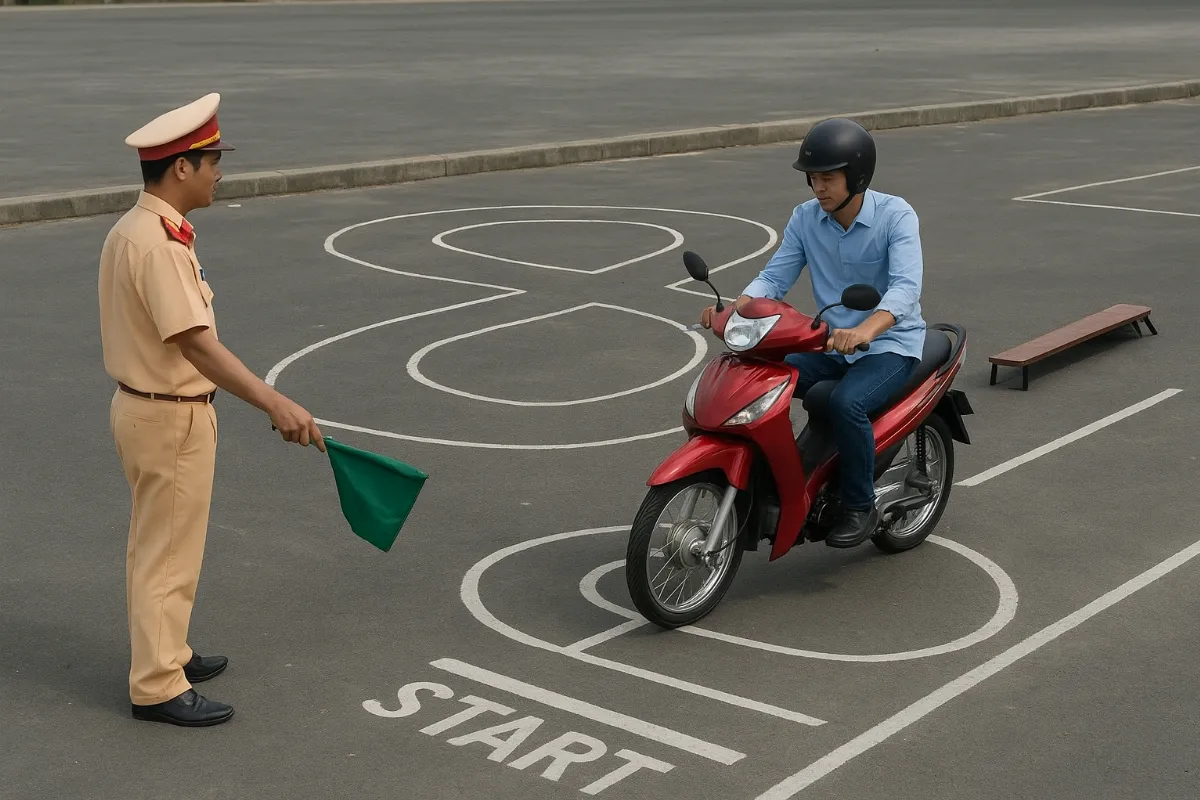
Motorbike exams typically include completing a figure-eight course, riding through narrow lanes, braking properly, and making controlled turns.
Car exams involve both fixed-course driving and on-road evaluations.
Tips for Driving Safely in Vietnam
Understand Local Traffic Culture
While traffic may appear unpredictable, there is an underlying rhythm to how people drive in Vietnam. Keep these points in mind:
-
Always wear a helmet that meets safety standards.
-
Keep a moderate speed and expect sudden stops.
-
Use your horn when passing or approaching crowded areas.
-
Be cautious around buses and trucks.
-
Avoid driving during peak hours if possible.
Insurance Considerations
Many rental providers offer basic insurance, but most policies are void if you do not hold a valid license. Travel insurance that covers motorbike accidents can provide an extra level of protection.
Common Mistakes to Avoid
Driving Without a Valid License
Even though many visitors do it, driving without the correct license is illegal and can lead to fines or legal issues during accidents.
Renting High-CC Motorbikes Without Experience
Some tourists rent 150cc to 250cc bikes without proper riding skills. These larger bikes require more control and are not recommended for beginners.
Ignoring Road Rules
Running red lights, improper lane changes, or turning without signals can lead to fines and dangerous situations. Vietnamese police do conduct spot checks, especially in major cities.
FAQs — Trusted Services
Yes, but only with a valid 1968 International Driving Permit and a license from your home country. Without those, only motorbikes under 50cc are legal.
Conversions usually take between 5 and 10 working days. Full training and exams for new applicants may take 2 to 4 weeks.
Many shops will rent to you, but it is not legal, and insurance will not cover you if an accident occurs.
You may face fines, your vehicle may be impounded, and insurance will likely refuse to cover any damages.