 EN

Have a Tight Connection After Landing? How Airport Fast Track Can Help Save Time
Last Updated: Wednesday, September 30, 2026
If your connection time at a major Vietnam airport is under 90 minutes, airport fast track can move you through immigration in roughly 10–20 minutes instead of 30 minutes to over an hour during peak periods. It works specifically on the immigration bottleneck — not on baggage claim, terminal transfers, or flight delays. Here's how to tell if you actually need it.
Key takeaways:
-
Connections under 90 minutes are where airport fast track typically makes the biggest difference.
-
Fast track speeds up immigration clearance specifically — it does not control baggage delivery time or terminal transfer distance.
-
Book as soon as you know your connection is tight, ideally when you book your flights, not after you've already landed.
-
International-to-domestic connections usually need more buffer time than international-to-international ones, since you may re-clear security.
-
If your layover is over 2–3 hours, you likely don't need this service at all.
What Actually Slows Down a Tight Connection

Photo: Collected
Before assuming fast track solves everything, it helps to know exactly where time gets lost:
-
Immigration queue — This is the step airport fast track is built to address, and it's often the single biggest variable, ranging from 10 minutes to well over an hour depending on flight volume.
-
Baggage claim — If your connecting flight requires you to collect and recheck luggage, this adds unpredictable time that fast track does not control.
-
Terminal transfer — Moving between terminals or buildings at the same airport can take longer than expected, especially at larger airports.
-
Re-checking in for a domestic leg — International-to-domestic connections typically require a full check-in and security process for the second flight.
-
Security screening (second pass) — Domestic connections generally mean going through security again, separate from your first arrival.
Fast track directly addresses step one. It does not touch steps two through five — which is exactly why understanding your own itinerary matters more than the service itself.
What Fast Track Actually Does for a Connecting Passenger
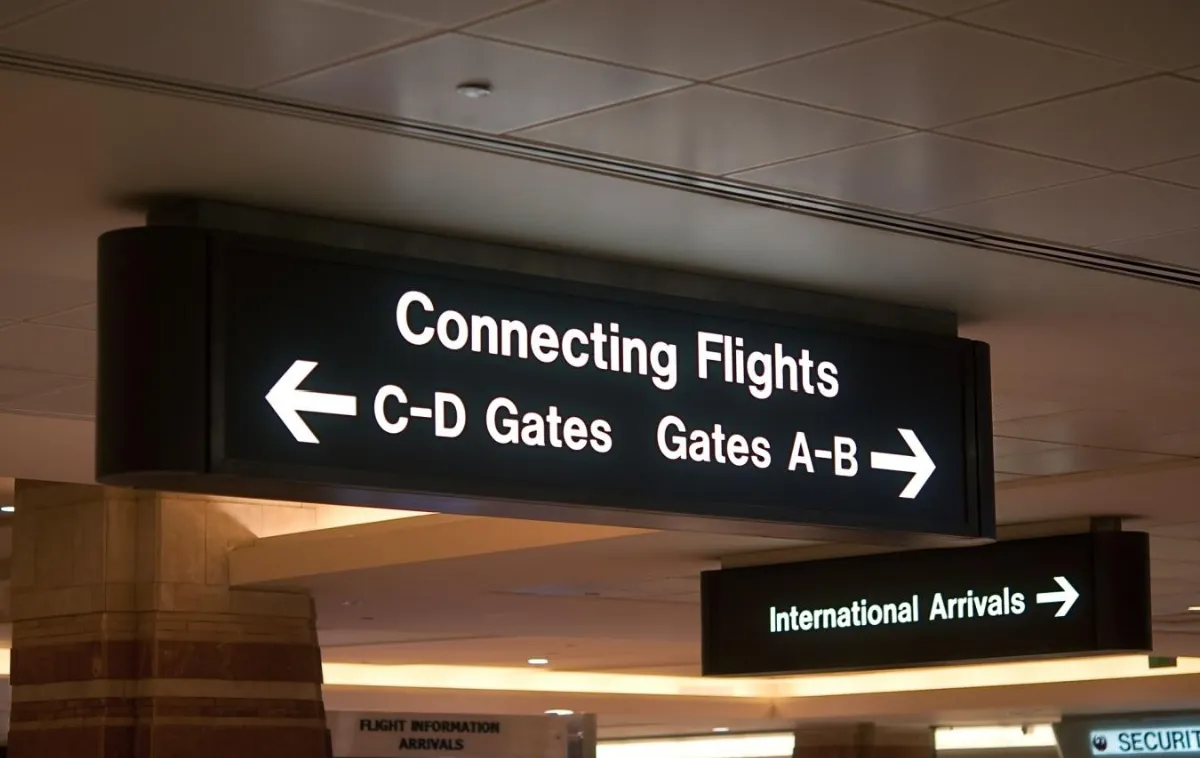
Photo: Collected
For travelers with a tight window, fast track immigration Vietnam service typically works like this:
-
A staff member meets you at the aircraft door or immediately past arrival, often already aware you're on a tight connection.
-
You're guided through a priority immigration lane rather than the general queue.
-
Passport and visa checks still happen — this step is never skipped — but without standing in line.
-
Staff can help direct you toward baggage claim or your next terminal, depending on your specific package.
One reviewer's experience reflects exactly this kind of situation. Jack Halpin described a check-in emergency where he was at risk of missing his flight entirely, and said the team "got me on my flight within the hour, even dealing with immigration within that time." That's the scenario fast track is designed for: a genuinely tight window where every immigration-line minute counts.
What Fast Track Does Not Solve
To keep this practical rather than oversold, here's what the service cannot do:
-
It cannot control your first flight's landing time. A delayed inbound flight eats into your connection window regardless of any service booked on the ground.
-
It does not hold your connecting flight for you. If your inbound delay is severe enough, no ground service can guarantee you'll still make your next departure.
-
It doesn't replace tracking your own gate information. You're still responsible for monitoring boarding announcements and gate changes once fast track staff have guided you through immigration.
-
It doesn't speed up baggage delivery. If your bags are slow coming off the belt, that time is outside the service's control.
Being upfront about these limits matters — a customer who books fast track expecting it to guarantee their connection regardless of circumstances is setting up disappointment. It reduces the immigration-line risk specifically. It is not a universal guarantee against missing a flight.
How Far in Advance Should You Book?
The ideal timing is as soon as you know your connection is tight — often at the moment you book your flights, not after you've already landed and realized the gap is smaller than expected.
If you're already in the air or have just landed and realize your connection is genuinely at risk, some providers can still assist on short notice, but availability is not guaranteed at that point, and response time depends on staffing at that specific airport and moment. Planning ahead is always the safer path.
When You Probably Don't Need Fast Track
To keep this honest: not every connection justifies the added cost.
-
Your layover is over 2–3 hours, giving you comfortable buffer even during peak periods.
-
You're traveling with minimal or carry-on-only luggage, removing the baggage-claim variable.
-
You're traveling solo and comfortable navigating an unfamiliar airport independently.
If all three apply to you, a standard connection is usually fine without additional assistance.
Frequently Asked Questions (FAQ)
Q1: Is 45 minutes enough for a connection, even with fast track?
This is generally considered high-risk regardless of assistance, especially for international-to-domestic connections that require rechecking baggage or clearing security again. Fast track reduces the immigration-line portion of your time, but 45 minutes leaves very little margin for any other delay.
Q2: Does fast track help me get my luggage faster?
No. Fast track addresses the immigration queue specifically. Baggage claim speed depends on the airport's handling process and is outside the service's control.
Q3: If my first flight is delayed, does fast track automatically adjust?
Notify the provider of your updated arrival time as soon as you know it, so staff can adjust their meeting time accordingly. This isn't automatic — proactive notice matters.
Q4: Do I need to book fast track for both flights, or just the first one?
Typically only your arrival leg needs fast track, since that's where the immigration queue occurs. Confirm with your specific provider if your itinerary includes multiple stops within Vietnam.
Q5: Which airports in Vietnam offer this service?
Availability varies by airport. Confirm coverage for your specific arrival airport before booking, particularly for smaller regional airports.
Q6: Can fast track guarantee I won't miss my connecting flight?
No service can guarantee this, since factors like your first flight's delay or gate changes are outside any ground service's control. Fast track reduces one specific source of delay — the immigration queue — not every possible risk to your connection.
Q7: Is fast track worth it if I only have carry-on luggage?
It can still help if your connection window is genuinely tight, since the immigration queue itself doesn't depend on whether you're checking bags. It matters less if your layover is already comfortable.
Conclusion
A tight connection in Vietnam usually comes down to one unpredictable variable: how long the immigration queue is when you land. Airport fast track directly addresses that variable, typically getting you through in 10–20 minutes rather than risking a much longer wait during busy periods. It doesn't control flight delays, baggage claim, or terminal transfer time — so use it as one part of a realistic connection plan, not a guarantee. If your window is under 90 minutes, the safest move is booking as soon as you know your schedule, not waiting until you've already landed.
👉 VAF – Your trusted travel and connectivity partner in Vietnam. Book here
If you have any questions or need personalized guidance, don’t hesitate to reach out to our expert team:
-
Whatsapp: +84379522522
-
Hotline: +84.379.522.522
-
Email: [email protected]